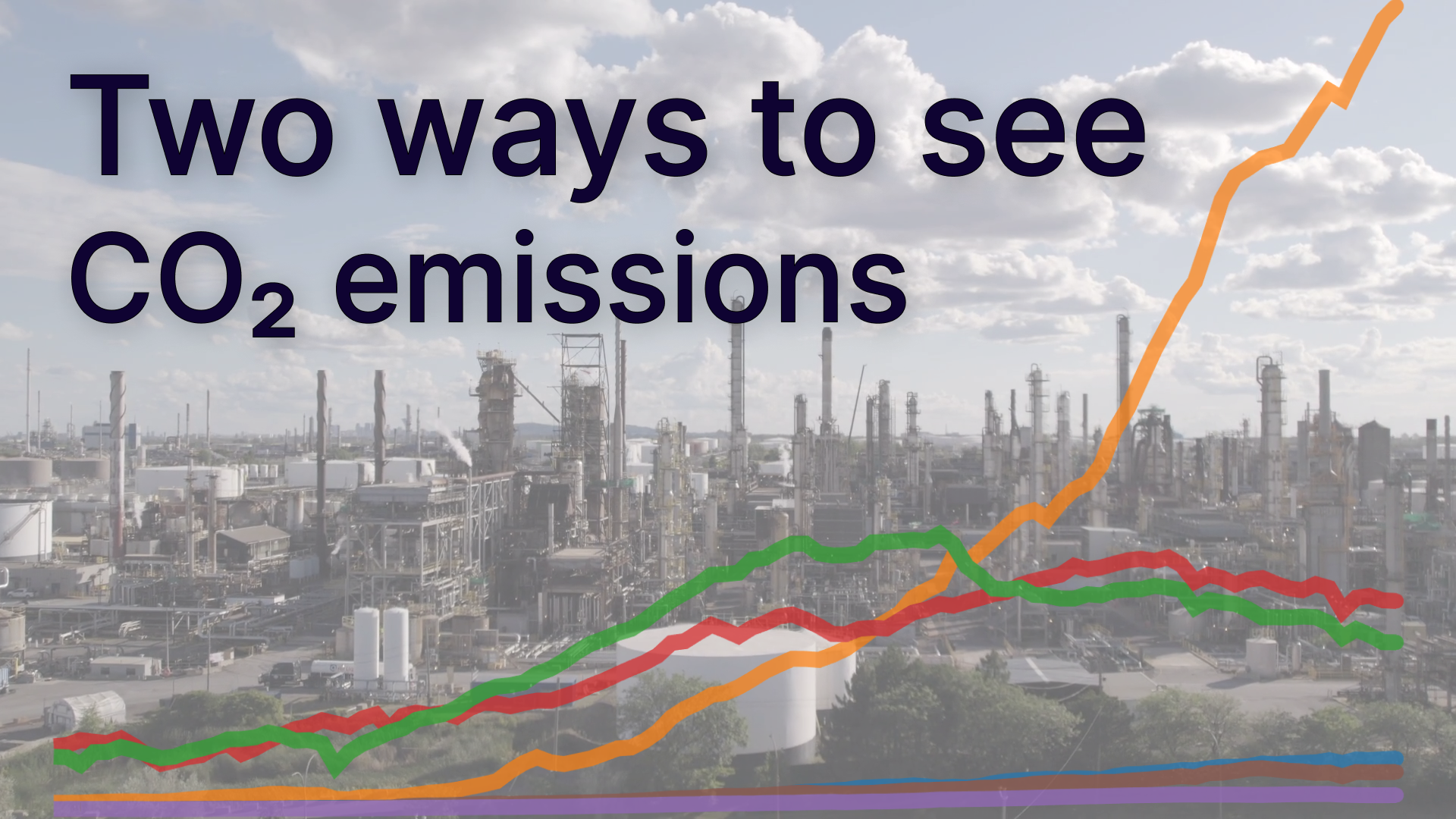
GDP per Capita Over the Last 50 Years
How the same data tells different stories
Over the past half-century, GDP per capita has risen across much of the world.
But which countries appear at the top depends strongly on how the data is filtered.
This article looks at GDP per capita (PPP) from 1975 to 2024, using two views of the same metric:
- a top-10 view including all countries, including microstates
- a top-10 view limited to major economies
Both charts use the same data and the same measure. What changes is the lens.
What GDP per capita measures
GDP per capita adjusts national output for price differences, then divides by population. It is commonly used to compare average income levels across countries.
It does not measure:
- income inequality within countries
- quality of life or public services
- how income is distributed
In this article, it is used strictly as a relative ranking metric over time.
Top 10 worldwide (all countries included)
This view shows the top 10 GDP-per-capita countries worldwide, with no restrictions on size.
Several features stand out:
- The top ranks are dominated by mostly small states
- Rank positions change frequently
- Income levels are volatile over time
Because populations are small, GDP per capita in these countries is highly sensitive to sector-specific changes. This chart highlights extremes, not typical national experiences.
Top 10 major economies only
This view uses the same metric and time span, but restricts the comparison to major economies.
Here, the structure changes:
- Income levels are lower but more tightly grouped
- Rank changes are slower
- Long-term trajectories are smoother
Large economies tend to experience more gradual per-capita change, reflecting diversified production and large populations.
Same metric, different lenses
These charts do not contradict each other.
They use:
- the same data
- the same metric
- the same years
The takeaway
Between 1975 and 2024:
- GDP per capita rose across the world
- The identities of the top-ranked countries depended on scale
- Context shaped interpretation
Same data.
Same measure.
Different stories.